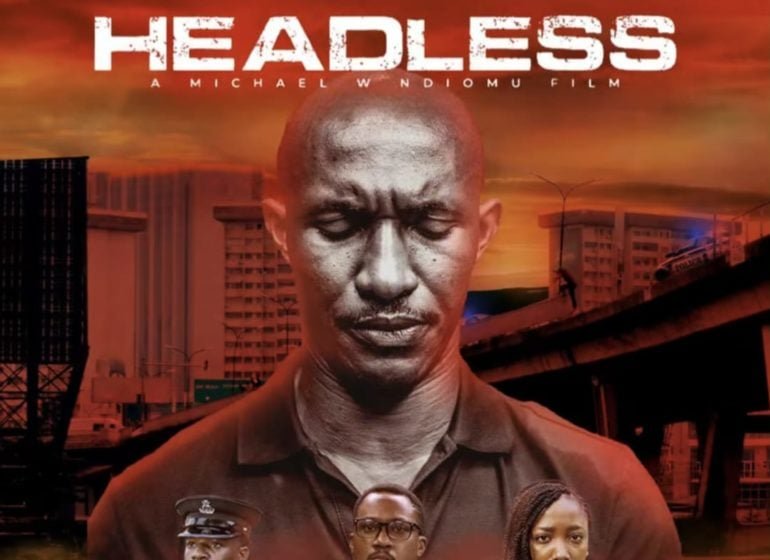
Thriller · In cinemas now · AFRIFF 2024 Opening Film
Verdict: Must See
The opening image tells you everything about what kind of film you are in. A Nollywood producer — the kind of man who has learned to move through rooms without touching the walls, whose success has made him careful in the way that only men who know where their success came from are careful — is stopped at a routine checkpoint. The police search the boot of his car. Inside: a severed human head.
Michael W. Ndiomu does not spend time on the discovery. He gives it to you cleanly, almost casually, and then he lets the weight of it settle while the film moves. What follows is a thriller that understands something most Nigerian films about the industry do not: that the real horror is not in what people do in the dark. It is in how ordinary the dark has become.
Gideon Okeke plays Erastus Okpanachi, the producer at the centre of the story, with the kind of controlled precision that this role demands and that he has been quietly capable of for years without getting a part worthy of it. Erastus is not a villain in the way genre films usually require. He is something more uncomfortable — a man who made accommodations, over a long time, until the accommodations became the man. Okeke holds that complexity without ever lecturing the audience about it. You understand Erastus not through what he says about himself but through the specific quality of his silences, the way he registers information and then reroutes it away from his face.
Uzoamaka Aniunoh, opposite him as the investigator who finds the boot and cannot let the investigation go, brings the same intelligence to a character who is being asked to discover what she already suspects. The film is smart enough to understand that her character’s obstacle is not information — she has most of it early. Her obstacle is what you do when the people connected to a crime are also the people whose goodwill keeps the lights on. That dilemma, which is the real subject of the film, is held in her performance without being announced in her dialogue.
The film was the opening selection at AFRIFF 2024 and spent over a year in controlled release before reaching cinemas in March 2026. That journey has shaped it in ways that are visible. Headless is not a film that has been optimised for the opening weekend. It has been finished rather than hurried, and the difference shows in the sound design — which operates like a second score, using the ambient acoustics of Lagos film sets, production offices, and car parks to build a texture of menace that the narrative alone could not carry.
The film’s one significant weakness is structural rather than tonal. The third act makes several choices that compress what should be a slow-burn reckoning into a more conventional resolution, and the compression does not fully serve the moral complexity the first two acts have built. The industry world Ndiomu constructs is specific enough that the questions it raises deserve more ambiguous endings than it ultimately allows itself. The last twenty minutes feel like a film that blinked when it should have held the stare.
READ ALSO: Evi Movie Review
But Headless is still the most genuinely unsettling film the Nigerian industry has produced about itself in recent memory. It is not a film that attacks Nollywood. It is a film that loves Nollywood enough to show it clearly, and to trust its audience to sit with what they see without the comfort of a clean verdict.
It is worth that discomfort. Seek it out before it leaves cinemas.
Headless is currently in cinemas nationwide. Dir. Michael W. Ndiomu · Prod. Independent · Dist. Independent · Runtime approx. 95 mins · Rated 18