Film Review
Action · Drama · Sequel · In cinemas now · Dist. FilmOne · Opened April 3, 2026
Verdict: Mixed
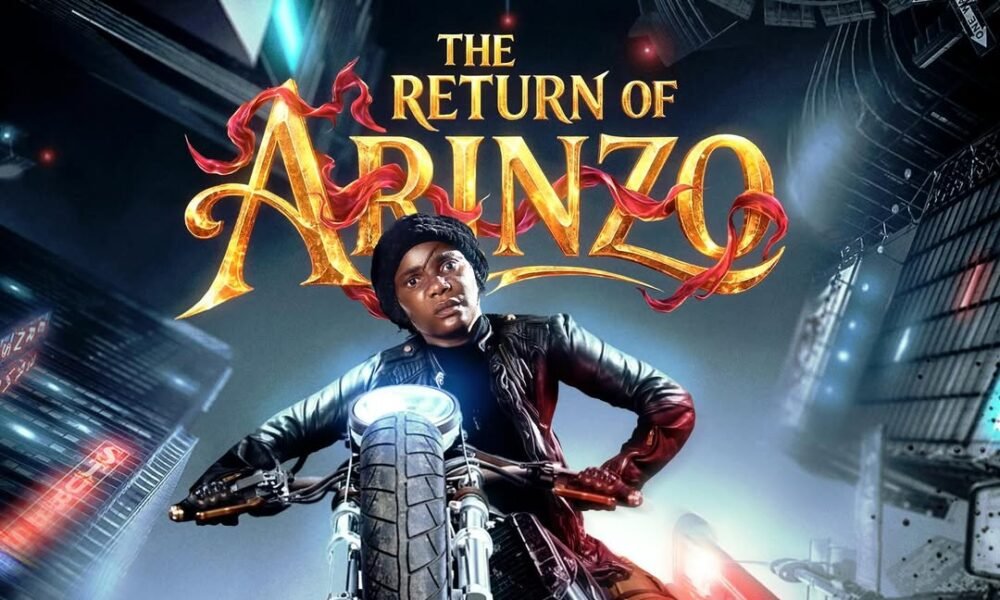
There is an industry truism that a sequel needs a reason to exist beyond its predecessor’s success. The Return of Arinzo opens with enough ambition to suggest Iyabo Ojo understands this. By the time it ends, it has demonstrated — with the thoroughness of a filmmaker who cannot be accused of doing things halfway — exactly what happens when ambition is not matched by the structural discipline to contain it.
The original Arinzo (2013) was a lean, character-driven story about two sisters on opposite sides of the law. It worked because it knew what it was. This sequel, arriving thirteen years later, knows what it wants to be — grander, more dangerous, more international, more emotionally complex — but does not, finally, know how to be any of those things simultaneously in one film.
The premise is genuinely compelling. Aisha is a woman the world believes to be dead. She has returned. Whether she is back for answers, for revenge, or for something more complicated than either is the question the first act promises to answer. The pan-African cast — Iyabo Ojo, Mercy Aigbe, Funke Akindele, Tanzanian star Juma Jux, Williams Benson, Bimbo Akintola, Uzor Arukwe — signals that the film is trying to position itself as a broader proposition than a standard Nollywood sequel. The production values justify the ambition. There are aerial sequences over Lagos that look genuinely cinematic, and a campaign rally scene in the film’s midsection that has both visual scale and the specific chaos of Nigerian political theatre.
But the film does not know which of its four storylines to trust. The revenge narrative and the political intrigue are set up in parallel, then allowed to run simultaneously without the structural clarity to make either feel urgent. The romantic subplot involving Juma Jux arrives, develops, and is resolved in ways that suggest it was written for a different film that was then grafted onto this one. The supernatural elements — the odeshi sequences that give Aisha her apparent invulnerability — are introduced without the tonal groundwork that would make them feel like the natural extension of this particular story rather than an imported genre convention.
The most symptomatic problem is the narration. The film explains itself. Characters narrate events that the camera should be showing, and plot connections that should be made through editing are instead stated by a voiceover that arrives whenever the story becomes too complex to follow on its own terms. This is not a small technical failure. It is a signal that the assembly process could not resolve what the script process left unresolved. When a film narrates its own plot, the film has not yet been made — only described.
There is real craft here. Iyabo Ojo, as a filmmaker, is not without instinct. Her performance in the film’s quieter scenes — when Aisha is alone and the armour is briefly off — is better than the surrounding noise gives her room to be recognised for. The opening weekend of ₦104.8 million suggests the audience found what it needed in the film even when the critic cannot. Audiences are not wrong to respond to spectacle, to the thrill of seeing beloved faces in the same frame, to the event-level pleasure of a big sequel on a big screen at Easter.
READ ALSO: Why Aba Blues Premiered in Lagos
But a ₦104.8 million opening weekend is also an audience asking for the sequel’s next chapter. That next chapter will require Iyabo Ojo, as a director, to choose one story and tell it completely. She has the resources, the cast relationships, and the creative instinct. What she needs, for the third film, is the ruthlessness to leave the other three stories on the floor where they belong.
The Return of Arinzo is currently in cinemas nationwide. Dir. Iyabo Ojo · Fespris Productions · Dist. FilmOne Entertainment · Opened April 3, 2026 · Runtime approx. 2hrs