The Platform That Asked Producers to Trust It With Their Films. Then Left Them Alone With the Results.
Inside Spixie Virtual Cinema — the promises, the producers who believed them, and what happened when the marketing stopped at the point of sale
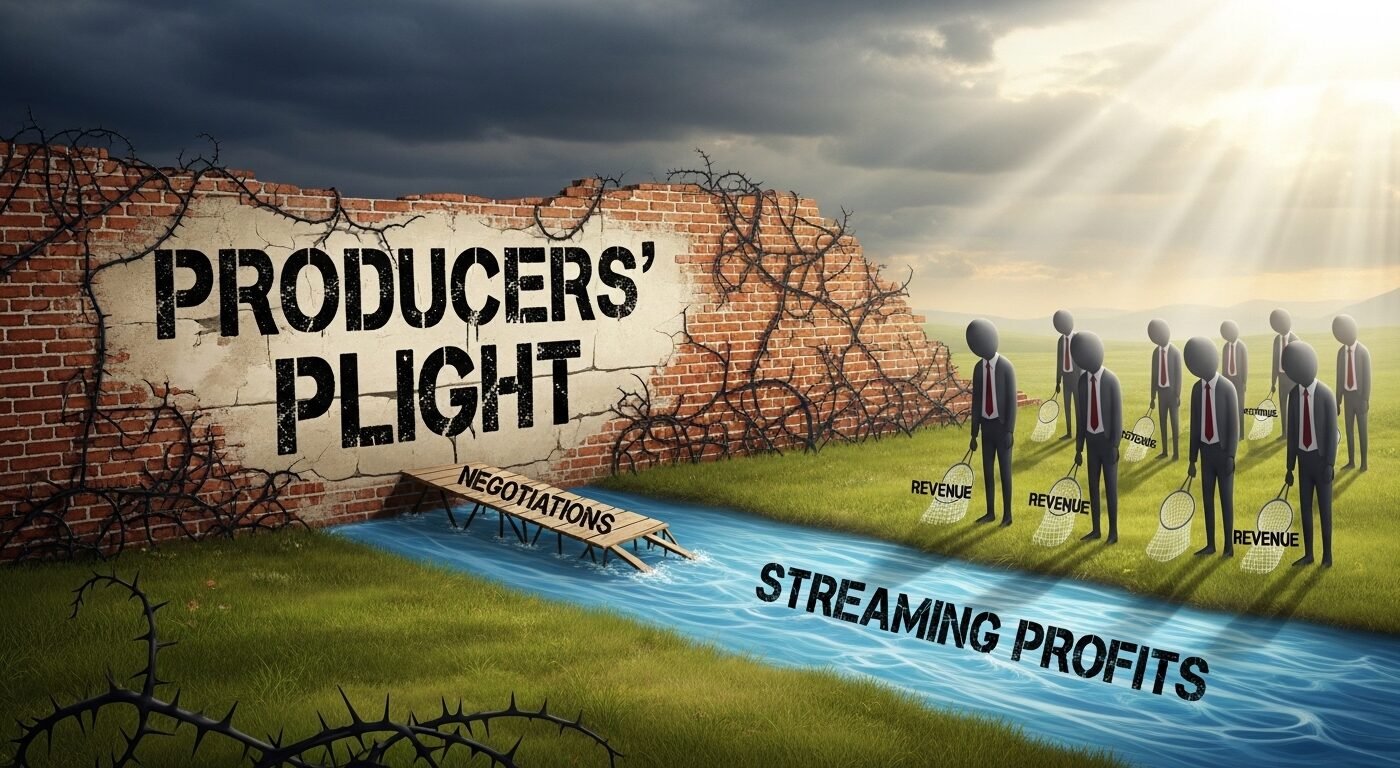
At some point after Adanne went live on Spixie Virtual Cinema, Dabby Chimere did something that most producers in her position are too proud to do publicly. She asked people to watch her film.
Not in the abstract, promotional way that every filmmaker asks — the Instagram story linking to a trailer, the cast post tagging distributors, the press release drafted in superlatives. She asked in the specific, direct, slightly uncomfortable way of someone who has looked at the numbers and understood that the gap between the film existing and the film being seen is wider than it should be. She put up posts. She reached out personally. She made clear, in language that was warmer than it was desperate but in which the urgency was audible, that the film was there, it was ready, and she needed people to come and find it.
The film did not find them. That is the distinction the industry needs to sit with.
Adanne is not a small production in the sense that the word is sometimes used to dismiss. The cast — Shaffy Bello, IK Ogbonna, Alexx Ekubo, Lilian Afegbai, Tacha Akinde — is credible, commercially recognisable, and collectively carries the kind of audience relationship that should, in theory, translate to a meaningful conversion rate when a film becomes available. The story — two sisters, sacrifice, survival, abandonment, and a Lagos that offers neither shelter nor mercy to the woman who has nothing left to bargain with — is the kind of material that Nigerian audiences have demonstrated, repeatedly and at the box office, they will spend money to experience when they trust the platform delivering it.
The platform they were asked to trust had 316 Instagram followers when NollyPrime checked.
I.
Spixie Virtual Cinema positions itself as a virtual premiere infrastructure company — a platform that gives filmmakers the tools to host online premieres, manage ticketing, handle global payments, and stream to audiences anywhere in the world without the physical and logistical overhead of a traditional theatrical premiere. The pitch, as it appears on the platform’s website, is genuinely attractive to a specific kind of producer: someone with a finished film, a promotional budget, and an audience they believe exists but cannot easily gather in one physical space. “Reach a wider audience with an online cinema experience,” the site reads. “Our virtual premieres unlock greater access to your fans from all over the world.”
The promise is real. The problem is in what the promise does not include.
What Spixie offers is infrastructure. A subdomain for your film, a ticket purchase system, a streaming player, payment processing across multiple currencies, analytics. What Spixie does not appear to offer — what the experience of producers who have used it suggests is notably absent — is an audience. The platform has no discovery function that a viewer browsing it encounters. There is no catalogue, no recommendation engine, no editorial front page, no algorithm serving film titles to registered users who might want to watch something tonight. The platform is a venue, not a marketplace. The difference between those two things is the difference between renting an empty theatre and hiring a distributor.
A producer who comes to Spixie with their own audience — who has a fan base large enough, and engaged enough, to find a ₦3,000 virtual ticket purchase compelling — may be able to make the model work. A producer without that audience is not being given access to Spixie’s audience in any meaningful sense, because Spixie, at 316 Instagram followers, does not have an audience to give.
II.
The economics of the arrangement compound the structural problem.
Industry sources with direct knowledge of Spixie’s revenue model have told NollyPrime that the platform takes 40 percent of ticket revenue from productions hosted on it. The producer keeps 60 percent.
The percentage itself is not necessarily unreasonable in the abstract. Physical cinema chains typically retain between 45 and 50 percent of box office gross. Distribution companies charge meaningful fees. Payment processors take their cut. The cost of infrastructure is real. A platform that provides genuine distribution value — that brings an audience to a film rather than simply providing the room where the film waits — can justify its fee on the basis of that value.
The question is whether Spixie is providing that distribution value or whether it is providing only the infrastructure while the producer bears the full cost of marketing, audience development, and conversion. If the answer is the latter, then the 40 percent is not a distribution fee. It is a hosting fee charged at distribution rates.
For producers who have made that calculation mid-campaign, the realisation arrives with a specific texture. You have spent money on marketing. You have built an audience on social media. You have generated awareness. And then you have watched potential viewers arrive at the edge of the purchase decision and encounter a platform they do not recognise, have no existing relationship with, have no reason to trust with their payment details, and have no prior experience of — and make the decision that the film is not worth the unfamiliarity.
Trust is not a brand sentiment. It is an economic variable. When a Nigerian consumer encounters a new digital payment request from an unfamiliar platform at ₦3,000, the friction of that unfamiliarity is real and it costs sales. Circuits, with its established presence and larger base, has spent years building the trust that makes a new viewer willing to enter their card details. IrokoTV has it from more than a decade of operation. Netflix has it globally. Spixie is asking producers — and their audiences — to build that trust from scratch, for each individual release, while simultaneously surrendering 40 percent of whatever results.
III.
The ilumin8 Movies situation with Loving Rona makes the stakes of the model concrete in a way that percentages alone do
not.
READ ALSO: The Year Nollywood Stopped Apologizing For Its Budgets
Sources with knowledge of the production told NollyPrime that Loving Rona, the ilumin8 production starring Meg Otanwa and Gideon Okeke, went through a promotional campaign for its Spixie premiere that cost in the region of ₦10 million. The film, directed by Luke Aire Oyovbaire, had the cast, the story, and the promotional investment. What it did not have, by the time the campaign concluded, was the audience. Sources say the film did not cross 50 sales on the platform.
Fifty. On a production with established names, real marketing spend, and a story that should have found its audience.
The number is not a reflection on the film. It is a reflection on the gap between the awareness that ₦10 million in promotion generates and the conversion that a platform with no embedded audience can produce. You can spend ₦10 million getting people to know that a film exists. You cannot spend your way past the platform trust problem. When a potential viewer’s final step before watching is a payment page on a platform they have never encountered, the purchase funnel leaks in ways that no amount of promotional spend upstream can seal.
ilumin8 Movies is not a small operation staffed by inexperienced people. It is one of Nigerian cinema’s production houses with a track record of commercially credible work. If they could not make this model work, the inference about the model’s structural viability is not complicated.
IV.
The irony sitting beneath this story is that the problem Spixie is attempting to solve is real.
The Nigerian film distribution landscape has a genuine gap where virtual cinema should be. The theatrical model, for all its recent commercial strength, serves a geographically and economically limited audience. A producer with a film that has strong diaspora appeal needs a distribution channel that does not require a flight to London or Atlanta. A filmmaker working outside the budget range that earns FilmOne’s attention needs somewhere to send their audience that is more dignified than a YouTube link and more accountable than a WhatsApp broadcast. The virtual premiere model, done well, addresses both of those needs.
Circuits has built something closer to what the gap requires — a functional TVOD platform with an established brand, a growing catalogue, and the kind of audience relationship that allows a new premiere to arrive in a context where viewers already trust the environment. The gap between what Spixie is and what Circuits is is not a technology gap. It is an audience investment gap.
Building an audience costs money, time, and patience of the kind that does not appear on an infrastructure balance sheet. It requires acquiring users before there are productions to justify acquiring them. It requires editorial curation, marketing, and a discovery experience designed for the viewer rather than the filmmaker. It requires being willing to be a media company rather than a software company that happens to host media. Those are different businesses, and the difference matters enormously to the producer who is trusting the platform with their film.
Spixie, from the evidence available, has built the software company half and left the media company half undone. That incompleteness is the specific failure that Dabby Chimere, and ilumin8, and anyone else who has premiered on the platform encountered on the other side of their marketing spend.
V.
There is a wider industry question here, and it is the one that the specific Spixie cases are really illustrating.
The Nigerian streaming market is in a moment of genuine structural uncertainty. Showmax is closing at the end of April. Netflix has halved its Nigerian acquisitions three years running. Amazon pulled back. The platforms that once provided commissioning income have largely moved to a licensing posture, which means the upfront money has dried up for the tier of producer who most needs it. The theatrical box office is performing at record levels, but theatrical is not accessible to every production, and the distribution infrastructure for films that do not meet FilmOne’s commercial threshold is thin.
Into that gap, platforms like Spixie arrive with promises that speak to genuine needs and are made credible by the urgency of the need rather than the substance of the offer. A producer who is running out of options will take a meeting with a platform that makes a reasonable-sounding pitch, because the alternative is no meeting at all. The platform charges 40 percent, the producer fronts the marketing budget, and the failure, when it comes, is attributed to the film’s commercial limitations rather than the platform’s structural ones.
That attribution pattern is the industry’s most expensive habit. It protects platforms from accountability and places the entire weight of failure on producers who have already spent their own money taking a risk on a partnership that was never equal.
The 40 percent is not the problem, exactly. The problem is 40 percent with no audience. The problem is infrastructure fees priced as distribution fees. The problem is a platform that asks producers to trust it, takes its cut from whatever they bring, and defines its responsibility as ending at the point of sale.
VI.
Dabby Chimere is a filmmaker with two Prime Video credits before Adanne. Head Over Bills and Rush Hour both found distribution on a platform with actual reach. She knew what functional distribution looked like when she entered the Spixie arrangement. The fact that she ended up publicly asking people to find her film is not a statement about her production or her audience. It is a statement about what happens when the platform between a film and its audience does not do the work of closing that distance.
The film is still there. Adanne is still at adanne.spixie.net, priced at ₦3,000 for Nigerian viewers. The story — sacrifice, abandonment, a woman left to navigate Lagos without the sister she raised — is the kind of story that deserves a proper audience. Shaffy Bello is in it. That alone should carry some commercial weight.
It is not carrying it because the platform through which it is being distributed cannot distribute. The distinction matters, and the industry should stop treating it as anything other than what it is: a distribution failure masquerading as a marketing one.
Producers who are considering Spixie Virtual Cinema for their next release should ask one question before signing anything. Not what the platform charges. What the platform brings.
If the answer is infrastructure, price it accordingly. If the answer is distribution, ask for the audience numbers.
The two answers are not the same thing. The industry has been paying distribution prices for infrastructure long enough.
NollyPrime reached out to Spixie Virtual Cinema for comment on the revenue share model and audience metrics described in this report. No response was received before publication.
Emeka Akindele is NollyPrime’s Senior Distribution Correspondent. Tips and industry correspondence: tips@nollyprime.ng. Sources for this report spoke on condition of background given the sensitive nature of commercial relationships within the industry.
