‘The Story Should Be Enough’: Kunle Afolayan on Dancing, Dignity, and Why He Is Done Apologising for How He Makes Films
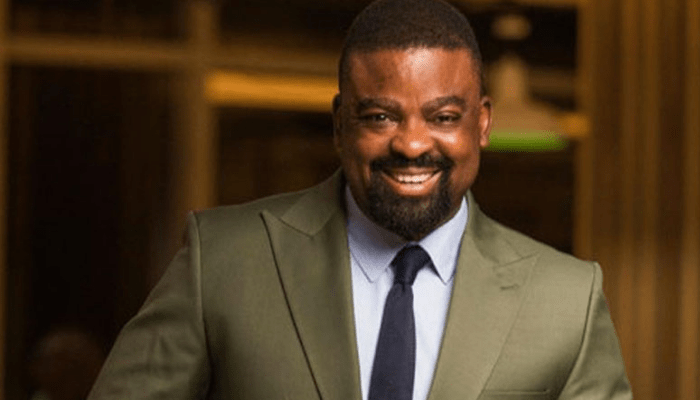
Kate Adeyemi speaks to Kunle Afolayan at the KAP Hub, Lagos, following the controversy that erupted after his remarks at the Lagos Business of Film Summit in February 2026. The room is quieter than you would expect from a man who has managed to make Nollywood's loudest noise by saying less than almost everyone else. He arrives without an entourage, sits down without ceremony, and speaks with the careful precision of someone who has spent the intervening weeks deciding exactly what he meant.
NollyPrime
Let’s start with what you actually said, because a lot of what followed the Summit was people responding to things you didn’t say. What was the original point?
Kunle Afolayan
The original point was about sustainability. It was about what this industry is asking of its filmmakers, particularly its directors and producers, in terms of the promotional cycle. You finish a film, you’ve given everything to it for maybe three or four years, and then before it opens you’re supposed to be online every day doing skits, changing costumes, dancing. And I’m not saying dancing is wrong. I’m saying it drains me in a way that filming does not. They are different kinds of energy, and one of them empties me. I said at the Summit that I can’t keep doing that. That was the whole point.
NollyPrime
But you specifically mentioned Funke Akindele by name. You said you don’t know how she does it. That’s not a neutral statement.
Kunle Afolayan
I said it with genuine admiration. I do not know how she does it. That is a true statement. I watch what she does — the energy, the consistency, the way she keeps her audience engaged from announcement to opening weekend — and I have nothing but respect for it. What I was saying was that I am not built for that. Not every filmmaker is. If the industry decides that the only path to cinema is through constant social media performance, then some of us will simply not be in cinema. And I don’t think that’s a good outcome for the industry.
NollyPrime
She called. You spoke.
Kunle Afolayan
We spoke. She is a serious filmmaker. Whatever people think about the conversation that happened publicly, my regard for her as a craftsperson is unchanged. Her last film crossed ₦2.7 billion. She has done something no other Nigerian filmmaker has done. You can’t argue with that number.
NollyPrime
And yet you also said you don’t want ₦2 billion at the box office if you’re only taking home ₦10 million. Explain that to me.
Kunle Afolayan
That is a business reality that the industry does not discuss openly enough. The headline number is not the producer’s number. The cinema chains take their share, the distributor takes theirs, marketing costs are enormous, and by the time you reach the producer, the figure is very different from what people are reading in the newspapers. I am not saying this to diminish what anyone has achieved. I am saying that the box office figure and the producer’s return are two different conversations, and we tend to conflate them. My question was about sustainability. If the model costs you more in energy, money, and time than it returns to you personally — is it sustainable?
NollyPrime
You also said your films are made for intellectuals. That landed differently than the dance conversation.
Kunle Afolayan
That statement was made in a specific context, responding to criticism of the Anikulapo series, and I stand by it in that context. What I meant was that my work is layered. It is designed to reward patience and attention. Not every film needs to be that. But when you make something that requires a viewer to think, you should not apologise for it. The audience that comes for October 1 or Anikulapo is a particular kind of audience. They come ready to work. I value that audience. I make films for them.
NollyPrime
KAP Film Village has trained over 35,000 students. KAP Academy exists. You are building infrastructure. But you have stepped back from theatrical releases. How does that square?
Kunle Afolayan
I have not stepped back from cinema. I have stepped back from the specific promotional model that cinema currently demands. There is a difference. We have stories in development right now. When the right collaboration is there — and the term I used was guarantee, not demand — when someone can guarantee that I can promote my work with the dignity that I think good work deserves, I will be back in the cinema. My father made films. I grew up watching cinema and believing in it. That hasn’t changed.
NollyPrime
And if no one can guarantee that?
Kunle Afolayan
Then I will keep training the next generation, keep building the infrastructure, and trust that the market will eventually create room for the kind of films I want to make. When we released a single screengrab of the new Anikulapo content recently, the response was — you saw what happened. The audience is there. The appetite is real. The question is only whether the promotional structure will evolve to meet it, or whether it will continue to demand the same thing from every filmmaker regardless of how different their work is.
READ ALSO: The Year Nollywood Stopped Apologizing For Its Budgets
NollyPrime
Last question. The industry is at ₦15.6 billion. Record admissions in Q1 2026. If this is Nollywood’s best moment commercially, why does it feel, in some quarters, like a crisis?
Kunle Afolayan
Because numbers can hide questions. We are generating more revenue from fewer people. Ticket prices are high and getting higher. Four films accounted for most of the growth last year. That’s a strong foundation but it’s also a narrow one. The industry needs more than four filmmakers to sustain it. It needs more production pathways, more distribution infrastructure, more trained professionals — which is exactly what I am building. The moment feels like a peak. I want it to be a floor. Those are two very different things, and the difference is in what you build while the numbers are good.
Kunle Afolayan is the CEO of Golden Effects Pictures and founder of KAP Film Village & Resort, KAP Academy, and the KAP Hub, Lagos. His directing credits include Irapada (2006), The Figurine (2009), October 1 (2014), Citation (2020), Swallow (2021), Anikulapo (2022), Anikulapo: Rise of the Spectre (2023), and Ijogbon (2023). He is a member of the Oscars Academy. This interview has been edited for length and clarity.

Kate Adeyemi is NollyPrime's Senior Industry Correspondent. She has covered the business of Nigerian film and television for fourteen years.