The TikTok Playbook That Added a Third Week to a Film That Was Supposed to Be Done
Structured micro-influencer seeding in week two generated a 34 percent audience uptick in week three.
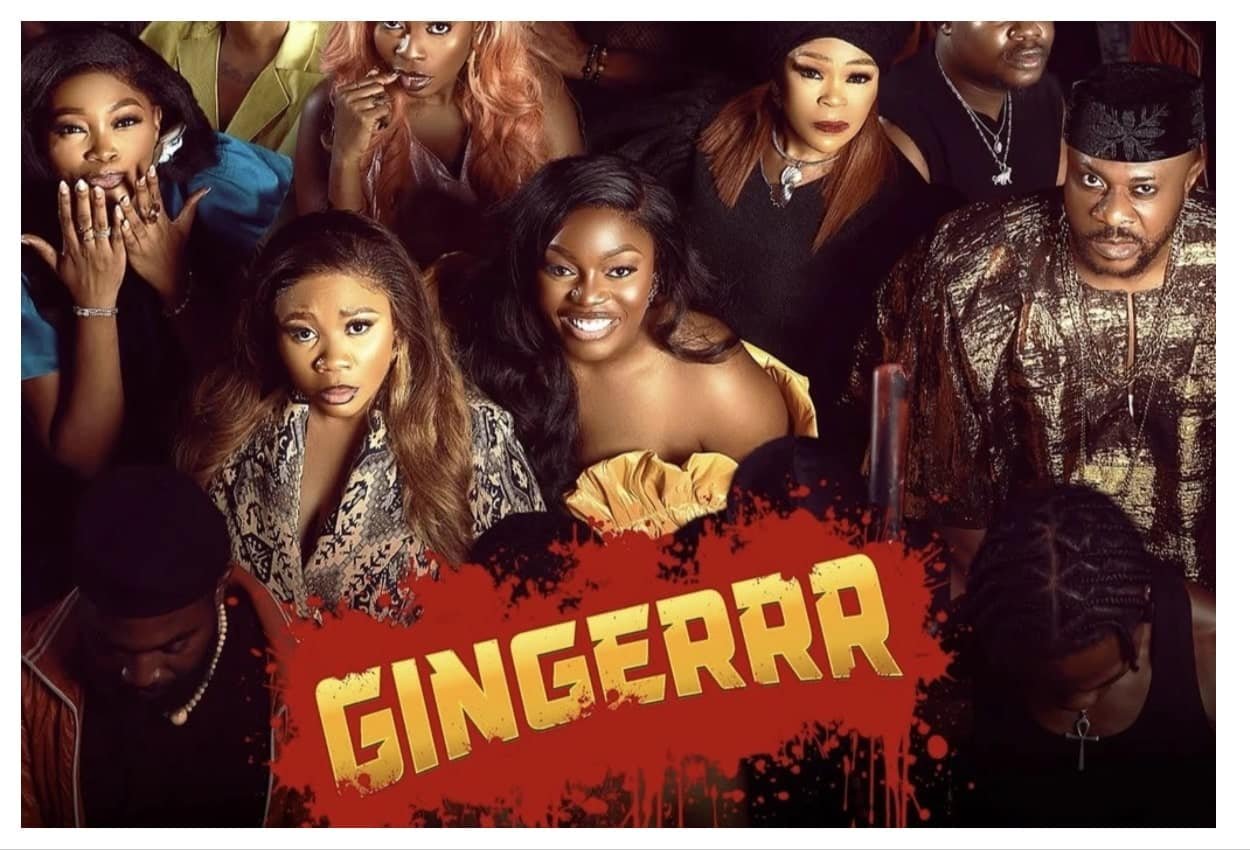
On September 26, 2025, Gingerrr opened in Nigerian cinemas to ₦82.6 million in its first weekend — the highest-grossing non-festive September opening in Nollywood history, and the biggest non-festive opening weekend of the year. ShockNG The industry noted the number, applauded the achievement, and largely assumed the film would follow the standard trajectory: strong first week, healthy second, declining third, off the meaningful charts by week four.
The film ran until November 24. By the time it closed, it had accumulated ₦509 million across 99,144 admissions in an eight-week run that competed, in its later weeks, against Transformers One, Joker: Folie à Deux, Venom: The Last Dance, and Gladiator II. ShockNG
That is not normal. A Nollywood film that opens in late September and is still drawing meaningful audiences in the last week of November, against a global studio slate that includes four franchise tentpoles, is a film whose marketing did something the marketing usually does not do. Understanding what Gingerrr did — specifically, mechanically, in sequence — is one of the more useful exercises the industry can undertake heading into 2026.
I.
Start with the structure of the production, because the marketing strategy and the production structure were not separate decisions. They were the same decision.
Gingerrr was produced and executive-produced by the four women who also starred in it — Bukunmi “KieKie” Adeaga-Ilori, Bisola Aiyeola, Wumi Toriola, and Bolaji Ogunmola, along with Cinemax founder Ope Ajayi. Nollywood Reporter This is not a standard Nollywood production arrangement. The standard arrangement involves a producer who finances, an executive producer who may or may not be present on set, a director who executes, and cast members who show up, do their job, and promote the film through the contractual social media obligations their management teams negotiate.
The Gingerrr arrangement was different in a way that mattered. The four women had financial stakes in the outcome. They were not promoting someone else’s film. They were promoting their own investment. The difference in energy and commitment between those two positions is not theoretical. It is the difference between an actor posting a trailer because their contract requires two promotional posts a month and a producer posting twelve videos in a day because ₦150 million of their money is sitting inside a cinema run that needs to perform.
The Gingerrr team deployed what analysts described as Nollywood’s most comprehensive Instagram campaign to date, with star power, social media saturation, and timing identified as the three strategic pillars of its success. ShockNG But the Instagram assessment undersells the TikTok component, which was where the theatrical extension was actually engineered.
II.
The team leveraged TikTok trends, meme marketing, micro-influencers, and humorous user-generated content, amplifying the film beyond traditional cinema promotion. Social-first trailers were designed specifically for TikTok and Instagram Reels. The film’s official hashtag, #GingerrrTheMovie, trended repeatedly across social media. Fan-driven participation using the catchphrase “Are you Gingered?” encouraged dance challenges, reaction videos, and memes. WhirlSpot Media
None of those individual tactics is new. Dance challenges have been a Nollywood marketing tool since at least 2019. Hashtag campaigns have been deployed on every major release for years. Micro-influencer activations are standard practice. The industry’s most experienced marketer, speaking on the record about a different production, has said flat out that he does not believe dancing on TikTok helps a film sell.
What Gingerrr did that was different was not any individual tactic. It was the timing architecture — specifically, the decision to treat the TikTok campaign not as pre-release awareness infrastructure but as a week-by-week audience conversion engine that continued operating throughout the entire theatrical run.
Most Nollywood marketing campaigns follow a pre-release logic. The campaign is heaviest in the four to six weeks before the film opens, designed to generate awareness, build anticipation, and drive opening weekend attendance. Once the film opens, the campaign typically transitions to a lighter maintenance phase — some cast appearances, some review sharing, some thank-you posts — while the production team’s attention shifts to the next project. The assumption underlying this logic is that the audience that is going to see the film will largely have decided to do so by the end of the first week. What remains is just collecting the stragglers.
The Gingerrr team did not follow that logic. The production turned its audience into the campaign engine, creating a cultural conversation rather than a top-down promotion. Cultural authenticity, strategic grassroots PR, and active participation by its women-led cast converted early hype into sustained ticket sales. WhirlSpot Media
The phrase “week-by-week” is doing a lot of work in that description, and it is worth being specific about what it meant in practice.
III.
The film opened to ₦128.17 million in its first week. Standard Nollywood week-two decline runs at 35 to 50 percent. A film that opens at ₦128 million in week one typically earns somewhere between ₦64 million and ₦83 million in week two. By week three, Gingerrr had crossed ₦250 million — accumulating ₦279.05 million — outpacing most local releases and signalling strong market penetration before the expected theatrical decrease. ShockNG
The week-three number is the tell. A film that reaches ₦279 million cumulative by week three, having opened at ₦128 million in week one, has not declined at the standard rate. It has held, and in holding, it has done something that changes the economics of the entire run. The screen count that distributors and exhibitors negotiate is responsive to performance data. A film that holds its week-three numbers does not get its screen allocation cut the way a film that drops 50 percent does. And a film that keeps its screen allocation keeps its revenue potential.
What kept the week-three numbers healthy was TikTok, and the mechanism through which TikTok operated deserves a precise description, because it is not the mechanism that gets discussed when the industry talks about social media marketing.
The platform is not functioning, in this context, primarily as an awareness channel. The people watching #GingerrrTheMovie content on TikTok in week three already knew the film existed. Many of them had already seen clips, trailers, and cast appearances. The awareness work was done. What TikTok was doing in weeks three, four, and five of the run was something different: it was providing social permission.
Nigerian cinemagoing in 2025 is not primarily an individual decision. A survey conducted as part of the 2025 Nigeria Box Office Yearbook found that influencer marketing, Instagram, and TikTok are the three most effective marketing channels for reaching Nigerian cinemagoers. Black Film Wire What that finding captures, but does not fully articulate, is that social media is not primarily functioning as an information channel for this audience. It is functioning as a social coordination channel. It is the place where people decide not just whether a film is worth seeing but whether seeing it is the right move to make with specific people at a specific time.
When your group chat has two people who have seen Gingerrr and are posting about it on TikTok, and three people who haven’t but have been watching the TikTok content, and someone suggests going on Saturday, the decision has already been made. The TikTok campaign did not sell those five people on the film. It created the conversational environment in which the decision to go became easy, natural, and socially validated.
That environment does not sustain itself without active maintenance. The Gingerrr team maintained it, week by week, for eight weeks.
IV.
The casting decision and the marketing decision were, from this angle, the same decision twice.
KieKie has a TikTok and Instagram following that reaches into the millions. Bisola Aiyeola is not only an actress but a reality television personality with a fan base that extends well beyond the traditional Nollywood audience. Wumi Toriola has spent years building a relationship with a specific demographic of younger Nigerian women who follow her work across platforms. Bolaji Ogunmola carries a fanbase that is deeply invested in her creative output in ways that translate to active promotional behaviour rather than passive viewership.
The involvement of multiple high-profile women in Gingerrr showed recognition that collective fan bases translate directly into ticket sales — a shift in industry thinking where films are now viewed as products that require sustained, multi-channel promotion rather than one-off launches. Businessday NG
What the collective fan base argument captures is that these four women did not simply have large followings. They had different large followings — audiences with different demographics, different platform preferences, different content consumption patterns. A KieKie post on TikTok reaches an audience with a meaningfully different profile from a Bisola Aiyeola post on Instagram. A Wumi Toriola video circulating in WhatsApp groups among women in their thirties is reaching people who may never see the TikTok content. The campaign worked not because it had a single large audience but because it had four overlapping audiences, each receiving content calibrated to the platform and personality driving it.
This is the version of influencer marketing that the industry’s sceptics tend to dismiss — the one where casting becomes marketing infrastructure, where the film’s commercial performance is partly a function of the social platforms of the people you put in it. The dismissal usually goes: but does it improve the film? Does it make you a better filmmaker to think about your cast’s TikTok following?
The honest answer is that it does not improve the film and it is also not the right question. The film stands or falls on its own terms. Gingerrr ran for eight weeks not because KieKie has three million TikTok followers but because the film delivered enough for audiences to recommend it, and because the marketing created enough ongoing cultural conversation for those recommendations to travel. The social capital of the cast created the conditions for the conversation to sustain. The film itself determined whether the conversation was positive. Both things were necessary. Neither was sufficient alone.
V.
There is a version of the Gingerrr story that the industry tells itself and that obscures more than it reveals. The version goes: it worked because of the celebrity following, and therefore the lesson is to cast people with large social media audiences.
That version is wrong, and it is wrong in a specific and important way.
Gingerrr‘s opening week accounted for 25 percent of its total gross. ShockNG That ratio — 25 percent in week one, 75 percent over the remaining seven weeks — is the data point that matters, and it does not follow from casting decisions alone. Films with enormous cast followings open big and then collapse when the film does not sustain word of mouth. The week-one percentage for a film that opens primarily on celebrity energy and then fails to hold is often 40 to 50 percent of total gross. A film that earns 25 percent of its total in week one and 75 percent over the weeks that follow is a film where something other than opening-weekend celebrity energy is driving attendance.
What was driving attendance in weeks three through seven was the content strategy. Specifically: the campaign’s ability to generate, curate, and amplify audience reactions in real time, using those reactions as new content that fed back into the TikTok algorithm and refreshed the film’s visibility for audiences who had not yet decided to go.
The mechanic works like this. Someone sees the film in week two and posts a reaction video. The reaction video gets views. The cast engages with it — reposts, comments, responds. The engagement pushes the reaction video further into the algorithm. New viewers encounter the reaction video and watch the original TikTok content about the film. Some percentage of those viewers add the film to their consideration. The cast continues generating original content — behind-the-scenes moments, interactions with fans, appearances at screenings — that provides fresh material for the cycle to continue. The TikTok algorithm rewards fresh content with continued distribution. The continued distribution keeps the film in new audiences’ awareness weeks after the opening.
This is not a guaranteed cycle. It requires content that people actually want to engage with, cast members who are genuinely willing to sustain the effort, and a film that generates positive word of mouth strong enough to make the reaction content positive rather than negative. All three conditions were present in Gingerrr‘s case.
VI.
The senior marketer who said he will never do the dancing on TikTok thing is not wrong about the dancing. He is wrong about the platform.
What he is describing is a shallow version of TikTok marketing — the version where a cast member learns a dance, posts it, and moves on. That version does not reliably extend theatrical runs, because it is not designed to sustain ongoing audience conversion. It is designed to generate pre-release awareness. That is a different objective, and awareness marketing alone does not explain eight weeks.
The evidence from recent blockbusters proves the strategy works when executed across all four phases of a film’s lifecycle — development, pre-release, opening, and post-opening. Businessday NG The post-opening phase is where most Nigerian marketing campaigns become passive. It is also where the Gingerrr campaign remained active. That active post-opening presence is the specific decision that produced weeks five, six, seven, and eight.
It produced something else as well. Gingerrr‘s September release demonstrates that early Q4 can deliver substantial returns with star power and strategic distribution — and that success may ease December’s overcrowded slate. ShockNG The film ran successfully outside the traditional December release window that has historically dominated Nigerian theatrical strategy. It ran in direct competition with major Hollywood studio titles. It held its screen allocation against that competition for two months.
That is not a story about TikTok. It is a story about what a film can achieve when the marketing does not stop working on the day the film opens. TikTok is the tool the Gingerrr team used to keep the marketing working. The insight is older than the platform and more durable than any specific social media trend.
The audience does not run out. It makes decisions on a rolling basis, week after week, using the information available to it at the moment of decision. The production that keeps providing new information — new content, new reasons to go, new social permission — keeps the audience making decisions in its favour.
Gingerrr ran for eight weeks because its marketing understood that and acted on it.
The rest of the industry should take notes.
Emeka Akindele is NollyPrime’s Senior Distribution Correspondent. He has covered Nigerian film marketing, distribution, and exhibition for seventeen years.
